
Most timeline articles online give a range of weeks or months. We looked for an official or industry source for that range and did not find one. The Houzz and Cost vs. Value pages we read give no duration, and the other pages that do are contractor and lead-generation articles. This guide therefore gives the steps in order, and the one kind of timing that cities themselves publish.
What the sources say about timing
Cities publish how long they take to review a permit application. These are the only timing figures here. Each is that city's own figure for permit review, not the length of a remodel.
- Evanston: the city lists building permits at 4 to 6 weeks and express permits at 3 to 4 business days.
- Champaign: the estimated plan review for one- and two-family permits is five business days from receipt of all material.
- Arlington Heights: once a permit is in review, the typical time allowed for initial review or revisions is 5 business days.
Other cities do not publish a figure on the pages we read. If your remodel needs a permit, ask your building department how long review takes before you agree to a start date. The permits guide shows which cities say what.
The steps, in order
These are the phases most kitchen remodels move through. No step has a duration here. Some jobs skip steps, and the order can change. A minor remodel that keeps the cabinet boxes and replaces the fronts, for example, skips new cabinet boxes entirely.
1. Measure and plan
The company measures the kitchen and you settle what the project includes. Drawings come next if walls, plumbing or electrical will move. Our kitchen layouts guide explains what changing a layout involves.

2. Get written estimates and choose a company
The Attorney General says to get more than one estimate and to get them in writing. See how to choose a kitchen remodeler.
3. Sign the contract
On a job over $1,000, Illinois requires a written contract before work starts (815 ILCS 513/15). The Attorney General's page and the state pamphlet recommend that it include starting and estimated completion dates. This is the step where you get the schedule in writing. See contracts and lien waivers.
4. Apply for permits, if the city requires them
Permit rules are set by each city. Wait for the permit before the work that needs it begins. The review times above are what the three cities say for their own offices.
5. Order materials
Cabinets, countertops, appliances and fixtures are ordered or chosen. We have no sourced lead times for any of them, so ask the company which items it is ordering and when it expects each one.
6. Demolition
Old cabinets, countertops and, in some jobs, flooring or walls come out.
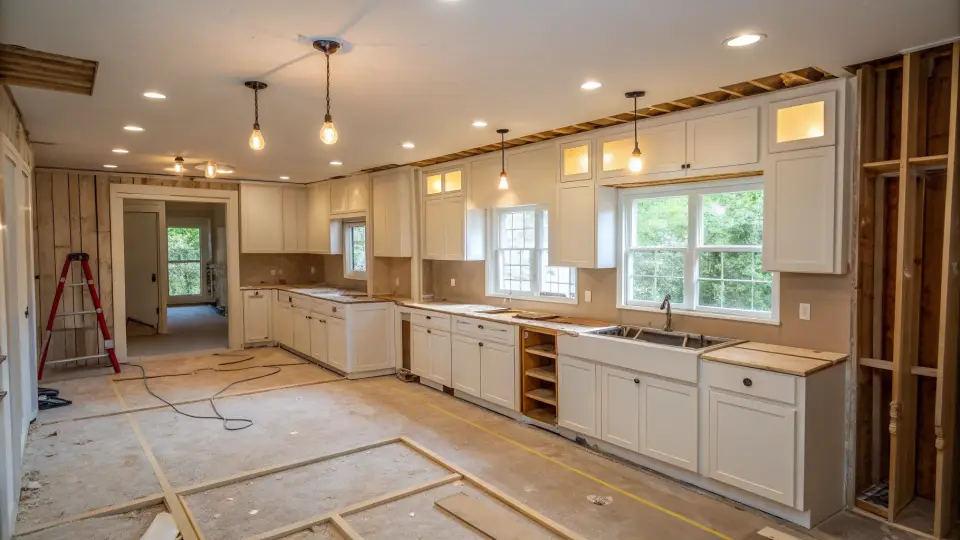
7. Rough-in work and inspections
Electrical and plumbing work that will be hidden behind walls is done first. Where a city requires inspections, they happen at set points. Wheaton, for example, requires rough inspections once all rough-ins are complete but before insulation or concealment. Ask the company which inspections your city requires and who schedules them.
8. Cabinets and countertops
Cabinet boxes are installed and leveled. Countertops are measured once the cabinets are in, which is called templating. The countertop is then fabricated and installed.
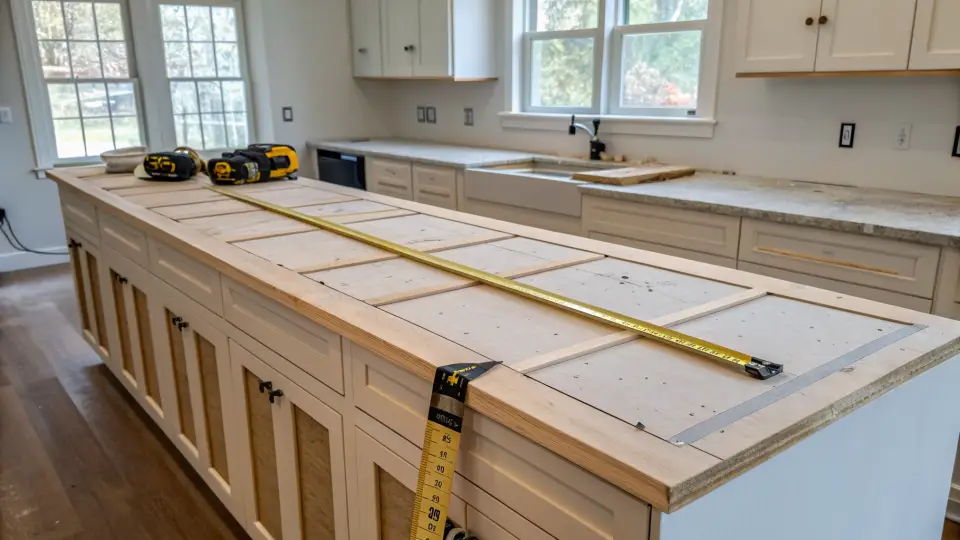
9. Finish work
Backsplash, flooring, paint, hardware, plumbing fixtures, lighting and appliances are installed and connected.
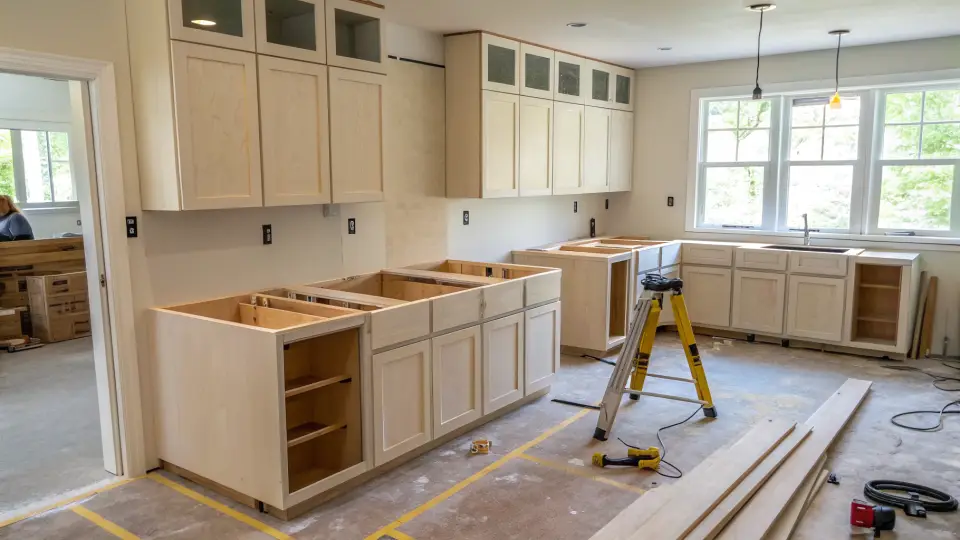
10. Final walkthrough, payment and paperwork
The state pamphlet says not to sign a certificate of completion or make final payment until the work is done to your satisfaction. Before you pay, the Mechanics Lien Act expects the contractor to give you a sworn statement of everyone who furnished labor or materials (770 ILCS 60/5(a)). Ask about lien waivers at the same time. The contracts guide explains both.
How to keep a schedule on track
Without a sourced duration, the best protection is the contract. Ask for starting and estimated completion dates in writing, ask what happens if the dates change, and ask whether the start date depends on permit approval. The questions guide has these and more.
To find a company, pick your city, such as Chicago, Evanston or Champaign, or browse every city.
Sources
Every source below was checked on October 19, 2026. Official pages change, so confirm anything that affects your job with the source itself.
- City of Evanston: Building permitshttps://www.cityofevanston.org/departments/community_development/building_development_services/building_permits/index.phpChecked October 19, 2026
- Village of Arlington Heights: Alteration, remodel, repair, residential permit (PDF)https://cms2.revize.com/revize/arlington/Alteration,%20Remodel,%20Repair%20-%20Residential.pdfChecked October 19, 2026
- City of Champaign: One and two family permit informationhttps://champaignil.gov/building-safety/one-and-two-family-permit-informationChecked October 19, 2026
- City of Wheaton: Kitchen remodeling, residentialhttps://www.wheaton.il.us/808/Kitchen-Remodeling---ResidentialChecked October 19, 2026
- Illinois General Assembly: Home Repair and Remodeling Act (815 ILCS 513)https://www.ilga.gov/Legislation/ILCS/Articles?ActID=2359&ChapterID=67Checked October 19, 2026
- Illinois Attorney General: Home repairhttps://illinoisattorneygeneral.gov/consumer-protection/home-repairChecked October 19, 2026
- Illinois General Assembly: Mechanics Lien Act (770 ILCS 60)https://www.ilga.gov/Legislation/ILCS/Articles?ActID=2254&ChapterID=63Checked October 19, 2026
- Journal of Light Construction: Minor kitchen remodel, midrangehttps://www.jlconline.com/cost-vs-value/minor-kitchen-remodel-midrange/Checked October 19, 2026